EACC moves to safeguard 700-year-old Kongo Mosque from land grabbers
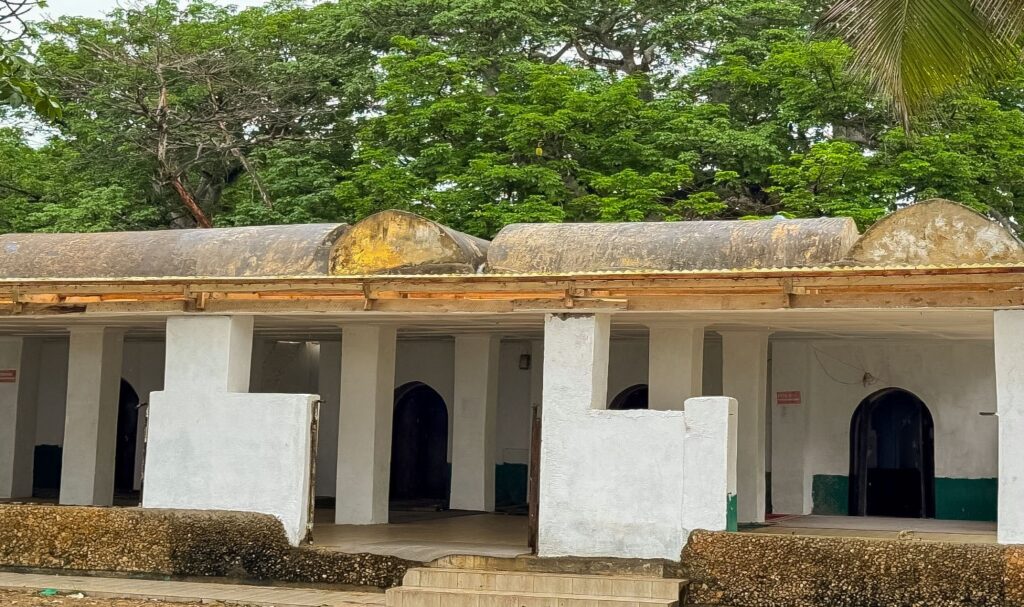
17:05:2025: The Ethics and Anti-Corruption Commission has intervened to stop the attempted grabbing of the historic Kongo Mosque, a centuries-old heritage site on Kenya’s Coast. The Commission’s CEO, Mr. Abdi Mohamud (in the picture above flanked by Director Legal, Mr. David Too at a press briefing after inspecting the site of the mosque), led a team to the site yesterday, Friday 16th, assuring residents that the iconic mosque, which has stood for more than 700 years, would remain intact and protected. He was accompanied by Director David Too and EACC Deputy Regional Manager Fatuma Saad. “We are here to witness and see the mosque that has been grabbed,” the CEO said. “In April, we received information that individuals had encroached on the land where this mosque, standing here long before Fort Jesus, has been for centuries.” The EACC launched investigations shortly after receiving the tip-off and, in May, secured orders barring any parties from interfering with the property. The Commission also wrote to the Ministry of Lands, instructing them to halt any transactions involving the contested land. “We assure the public that the property will remain intact,” he said, noting the significance of the mosque’s heritage. Kongo Mosque, known for its coral stone architecture and distinctive Swahili craftsmanship, has twice been gazetted as a national monument, in 1927 and, again, in 1983, due to its historical and cultural value. The visit comes amid heightened concerns over increasing cases of land grabbing targeting public and heritage sites across the country. Residents of the Kongo area had raised alarm over suspicious activities on the site, prompting swift action from the Lower Coast Regional Office. The Commission has vowed to continue its vigilance and ensure that Kenya’s historical landmarks are preserved for future generations.
A partnership for the environment
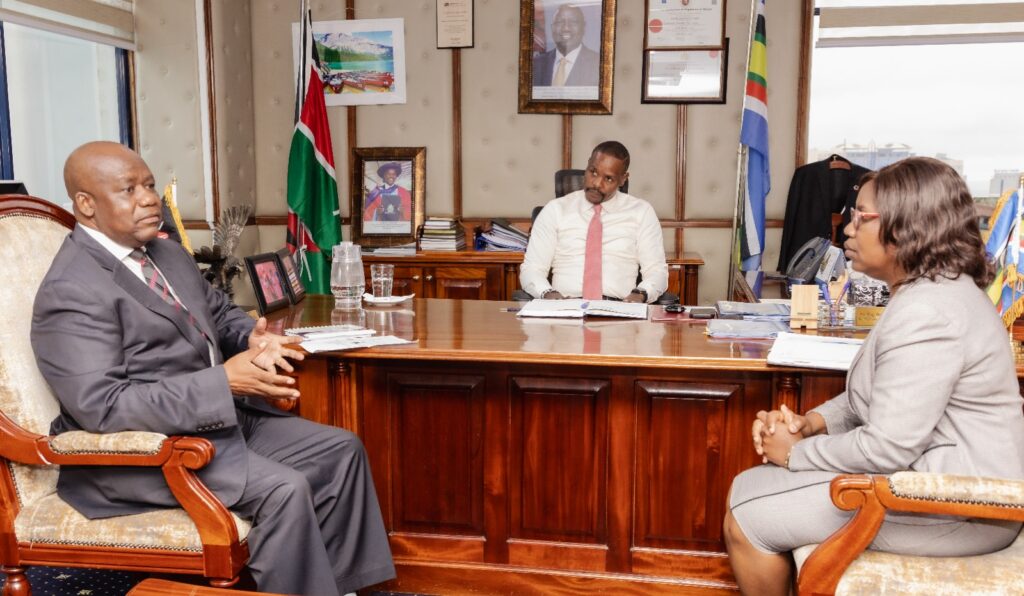
11:04:205: The Ethics and Anti-Corruption Commission (EACC) has launched a compliance monitoring exercise in collaboration with the Ministry of Environment, Climate Change, and Forestry. This follows the Commission’s 2018 review of the Ministry’s systems, which identified 150 corruption prevention interventions. The review’s findings were formally handed over to the Ministry in June 2019. Speaking during the launch on March 27, 2025, at the Ministry’s Headquarters at NHIF Building in Nairobi, the Principal Secretary for the State Department of Environment and Climate Change, Dr. Eng. Festus Ng’eno, expressed his full support for the ongoing collaboration, emphasizing that the outcomes of the exercise will not only improve service delivery but also foster a cleaner healthier, and more sustainable environment for both current and future generations. The decision to undertake the compliance monitoring, said Mr. Vincent Okong’o, Director Preventive Services at EACC,was driven by several allegations of funds embezzlement, abuse of office, procurement irregularities, and maladministration within the Ministry. “I urge the Ministry of Environment, Climate Change, and Forestry to view the findings from the 2018 examination as an opportunity to enhance service delivery. The full implementation of these recommendations will strengthen governance, promote transparency, and improve public service,” he said. The Ministry of Environment, Climate Change, and Forestry plays a crucial role in managing and safeguarding Kenya’s natural resources, ensuring sustainable use, and addressing the impacts of climate change.
South Sudan Anti-Corruption Commission benchmarks with EACC
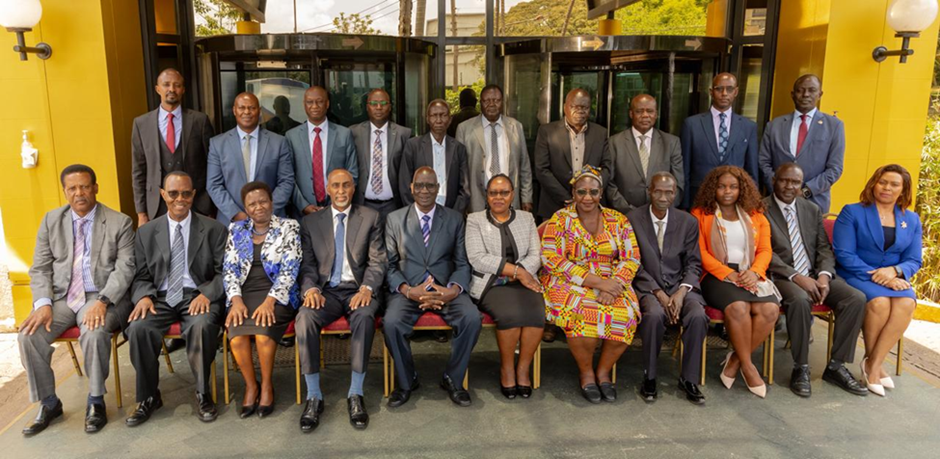
11:04:2025: The Ethics and Anti-Corruption Commission (EACC) hosted a delegation from the South Sudan Anti-Corruption Commission (SSACC) as part of a five-day benchmarking tour. The visit, which started on March 17 and ended on March 21, 2025, aimed to foster collaboration, share best practices, and strengthen anti-corruption efforts between the two nations. The eight-member delegation, led by Hon. Samuel Jock Bany Mading, Deputy Board Chairperson SSACC, sought to gain insights into Kenya’s anti-corruption strategies and ethical governance standards. The team engaged EACC Vice Chairperson Dr. Monica Muiru, Commissioners Dr. Cecilia Mutuku, Colonel (Rtd) Alfred Mshimba, CPA John Ogallo, CEO Mr. Abdi A. Mohamud, and directors. Dr. Muiru reaffirmed EACC’s commitment to support regional peer agencies in strengthening anti-corruption initiatives through sharing best practices. Mr. Mohamud expressed appreciation for the confidence SSACC has demonstrated by choosing to visit Kenya on a learning tour. Engagement with key constitutional bodies As part of the bench-marking tour, EACC facilitated visits for the South Sudan delegation to key institutions that promote transparency and accountability. These included the Financial Reporting Centre (FRC), Office of the Director of Public Prosecutions (ODPP), Public Procurement Regulatory Authority (PPRA), and Office of the Auditor General (OAG).
EACC to enhance media partnership in anti-corruption drive
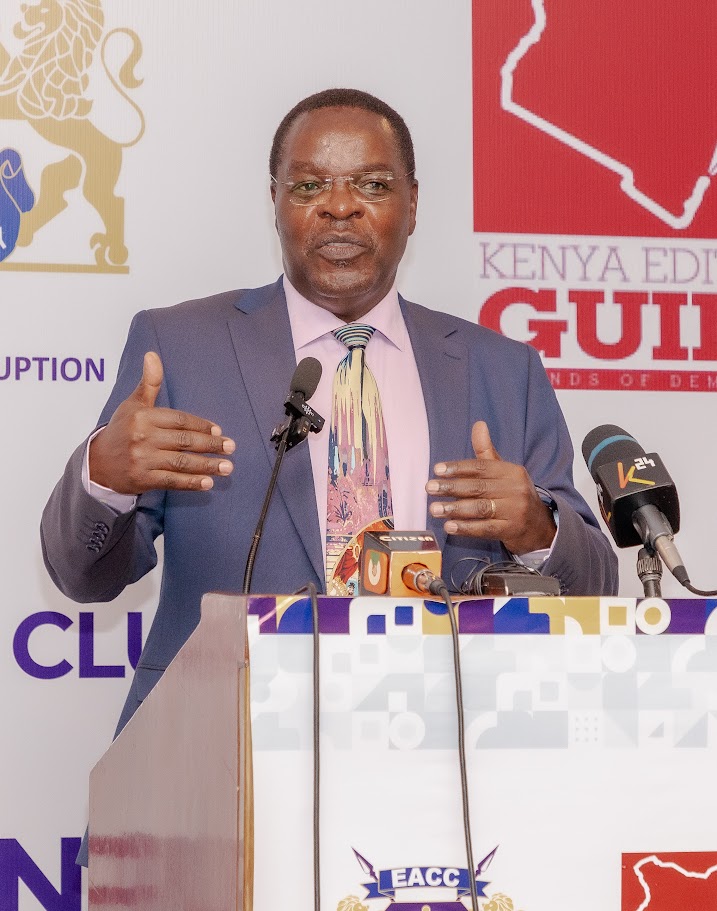
11:04:2025: The media plays a key role in the fight against corruption and in preserving the country’s assets, the Ethics and Anti-Corruption Commission (EACC)’s Chairperson, Dr. David Oginde, has said. Equating his role of combating and preventing corruption and unethical conduct as EACC’s Chairperson to protecting Kenya’s maize farm against monkeys, Dr. Oginde said the media vplays a critical role in ensuring those, like the monkeys, who want to harvest where they have not planted are exposed. Dr. Oginde (in the photo above) spoke on April 3, 2025, at the EACC-Kenya Editor’s Guild Consultative Forum at Sarova Stanley Hotel in Nairobi. Dubbed Turning the Tide: From Stolen Assets to Public Good, the forum highlighted the crucial link between the Commission’s strategic focus on asset tracing and recovery and utilizing recovered assets for the greater good. The event was attended by the president of the Kenya Editors Guild, Zubeida Kananu; the CEO of the Media Council of Kenya, David Omwoyo Omwoyo; the president of The African Editors, Churchill Otieno; the president of the Crime Journalist Association of Kenya, Joseph Muraya; the Secretary General of the Kenya Union of Journalists, Eric Oduor; among other senior media practitioners. The Chairperson reiterated the significance of harnessing collective synergy in recovering stolen assets. “The media plays a public watchdog role through investigative journalism, creating awareness of what may be happening so that action may betaken. We work together to ensure that assets that have been or are about to be stolen are protected from thieving hands,” he said. The Commission’s CEO, Mr. Abdi A. Mohamud, reiterated the importance of EACC’s strategic focus on asset tracing and recovery and utilizing recovered assets for the greater public good. The CEO said that the rationale behind asset recovery is to ensure that the corrupt do not profit from their corrupt conduct. This, among others, has informed the paradigm shift by the Commission to focus on the recovery of proceeds of corruption. watchdog in the fight against corruption and promised to strengthen partnership with the fourth estate. The media fraternity emphasized the need to ensure that recovered assets benefit the public effectively and are not re-looted. They also called on stakeholders to ensure the safety of investigative journalists and whistle-blowers. “One of the greatest risks facing journalists reporting corruption is intimidation, threats, and, in extreme cases, violence,” said the Kenya Editor’s Guild president. She called on the EACC to work more closely with relevant agencies to strengthen witness protection measures, including extending protection mechanisms to journalists covering corruption cases. In a presentation, Leveraging Recovered Assets for Public Good, Mr Joe Ageyo, Editor-in-Chief of Nation Media Group, called on all stakeholders in the anti-corruption war to play a role in media sustainability. Mr. Ageyo said independent media faces financial struggles and threats to its freedom. As a watchdog in exposing corruption and ensuring accountability and transparency, he invited EACC to support investigative journalism.
NOTICE ON AUTOMATION OF THE SELF DECLARATION PROCESS
A clearing agent jailed for bribery
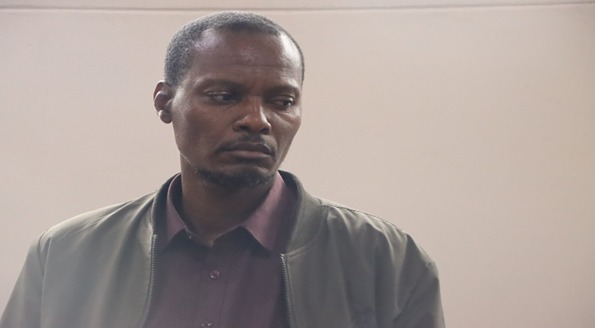
04:04:2024: The Ethics and Anti-Corruption Commission (EACC) welcomes the conviction and sentence of Philip Mutua Kilonzo, a clearing agent, for bribery and obtaining money by false pretense. Kilonzo was, on April 2, 2025, found guilty of soliciting and receiving a bribe and obtaining money by false pretense and sentenced to two years imprisonment or a fine of Kes3.05 million. An investigation conducted by EACC revealed that Mr. Kilonzo facilitated the clearance of a cargo container for Grace Children’s Home, an orphanage affiliated with the African Evangelical Church Ministries in Kangundo, Machakos County, in 2020. The container had all customs duty duly paid. However, in October of the same year, he falsely claimed that the church had an outstanding customs duty and demanded a bribe of Kes 5.8 million to have the debt “written off” by KRA officials. The bribe was later negotiated to Kes 2.9 million. Further investigation revealed that on October 1, 2020, Kilonzo received Kes 20,000 from a Church official, falsely presenting it as travel expenses for a supposed trip from Busia to Nairobi, where he claimed to resolve the tax dispute between the Church and KRA. Kilonzo was arrested and arraigned on May 14, 2024, following the Director of Public Prosecutions’ concurrence with the EACC’s recommendation to prefer charges under the Anti-Bribery Act and Penal Code. Milimani Anti-corruption Court Principal Magistrate Hon. Celestine Okore yesterday, April 2, 2025, sentenced Mr. Kilonzo to two years imprisonment or a fine of Kes 1.5 million for the first two counts of bribery, and eight months imprisonment or a fine of Kes 50,000 for obtaining money by false pretense. The sentences will run concurrently.
EACC calls for a unified action in war against graft
March 25, 2025 – The Ethics and Anti-Corruption Commission CEO, Mr. Abdi A. Mohamud, has called for a unified, strategic effort to tackle corruption in Kenya. Speaking today at the launch of the Anti-Corruption Strategic Guiding Framework for the Justice Sector, which was attended by, among other stakeholders, the top leadership of Parliament, the Judiciary, the Executive, and IEBC, Mr. Mohamud stressed the urgent need for collaboration across institutions to combat corruption and economic crimes. He hailed the framework as a potential “game changer” if fully implemented and underscored the Commission’s dual focus on enforcement and prevention, citing the recovery of Kes28 billion in corruptly acquired assets over the past five years and the prevention of Kes41 billion in losses through proactive investigations. The Commission is also pursuing over 400 cases to forfeit assets worth KES 50 billion, he said. “Asset recovery is a stronger deterrent than prosecution alone. It strips corrupt individuals of their illicit gains,” the CEO said, warning that corruption and organized crime threaten Kenya’s stability, economic growth, and sustainable development. In her keynote address, Chief Justice Martha Koome described the launch as “a bold new chapter” in Kenya’s pursuit of integrity. She called the framework, developed under the National Council on the Administration of Justice (NCAJ), a “shared pledge” to strengthen justice institutions and dismantle corruption systematically. The initiative traces back to the Inaugural Heads of the Arms of Government Summit on January 22, 2024, when President William Ruto rallied the Government’s three branches to unite against corruption, tasking NCAJ with the justice-sector roadmap. “Corruption poisons the rule of law. It undermines human rights and distorts justice,” the Chief Justice said, referencing its violation of Kenya’s constitutional values. The framework outlines 76 programs for short, mid, and long-term action, emphasizing inter-agency collaboration and public trust. Among the Judiciary efforts, the Chief Justice highlighted the Court Integrity Committees at every court station, multi-stakeholder bodies tackling grassroots corruption, and daily briefings reinforcing a zero-tolerance policy. She urged Parliament to enact supporting legal reforms and the National Treasury to fund the framework’s rollout. “This is a moral imperative, not just a legal one,” she said, crediting the NCAJ Anti-Corruption Committee, led by EACC’s CEO, and the European Union for their contributions. The NCAJ unites justice sector actors to promote an efficient, effective, and collaborative justice system. The framework aims to streamline investigations, prosecutions, asset recovery, and adjudication of corruption cases, enhance coordination and accountability, implement targeted anti-corruption measures, and build public trust in anti-corruption efforts.
EACC: Search warrants are investigative tools and not criminal proceedings
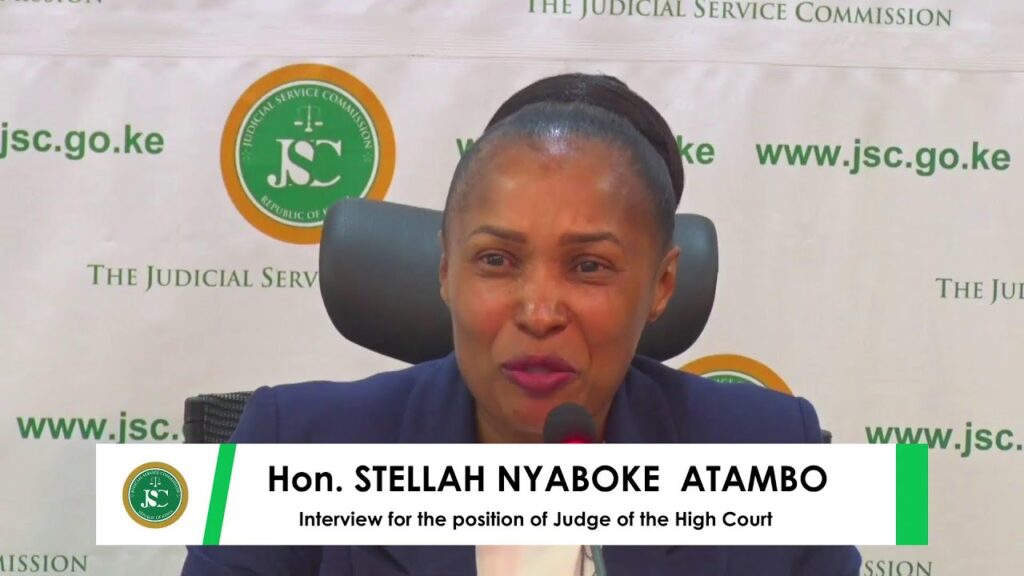
18:03:2025: The Ethics and Anti-Corruption Commission has responded in detail to the application of the Chief Magistrate (CM) of Thika Law Courts, Hon. Stella Atambo, which asserted that the Commission has no audience before the Court. This is in relation to the search orders that the Commission obtained against the Hon. CM on March 12, 2025, and successfully executed on March 13, 2025, following complaints that she demanded and received bribes from accused persons in criminal cases before her. On the day of the search, which produced a total of Kes2.07 million in cash from Hon. Atambo’s residence, suspected to have been solicited from accused persons and other relevant documents to the investigations, she served the Commission with an application and an order staying any operations arising from the search warrants. The application also ordered the parties to appear before the Court the following day, March 14, 2025. In the application, through her lawyers, she argued that the ex parte search orders by EACC were obtained through material non-disclosure of facts, particularly her identity. The Commission filed a replying affidavit and a notice of preliminary objection on March 13, 2025, opposing her application. On March 14, 2025, pursuant to the court’s directions, the parties appeared before the Court for an inter-partes hearing. The Hon. Ondiek asked the Commission to address the identity of the person of interest in the search warrant and why the Commission gave the person’s identity in the manner that it did, as Bonareri N. and not her full name. After the counsel for the Commission satisfactorily addressed the issues, Hon. Ondieki ruled, recusing himself from hearing the application, citing close family ties with Hon. Atambo. He directed the matter to be placed before the Head of Station on March 17, 2025, for directions. The parties appeared before CM Hon. Barasa yesterday, March 17, 2025. Hon. Atambo’s counsel made an oral application asserting that the EACC has no audience before the Court and should not be entertained in the proceedings. They exclusively argued that the power to prosecute was solely within the mandate of the DPP, and the EACC Counsel cannot assume prosecutorial powers without demonstrating that they have been gazetted or have been given delegated powers to prosecute by the DPP. The Court set March 18, 2025, as the day it would give directions on whether or not EACC counsel could have an audience before court. Today, March 18, 2025, the Court, on the strength that no one should be condemned unheard, directed that EACC had a right to respond to the issues raised by the Hon. Atambo as to whether it had a right of audience before the Court. Led by the Director of Legal Services, EACC’s lawyers submitted that the Commission is an independent body established under Article 79 of the Constitution with the mandate to investigate corruption, economic crimes, and ethical breaches and that search warrants are investigative tools that should not be interpreted as criminal proceedings. They further submitted that it is after conducting investigations that the EACC is required by law under section 11 1(d) and Section 35 of the EACC Act to forward the result of the investigation to the DPP. The Court was invited to look into various court cases where issues relating to the legality of search warrants have been litigated and orders to that effect granted. Particularly, the Court was invited to look into the matter of EACC & DPP -vs.- Tom Ojienda and Another and the matter of EACC -vs.- Kitui County Government. As a rejoinder, Hon. Atambo’s advocates reiterated that the issue of application of search warrants falls within the DPP’s mandate under Article 157 of the Constitution. The matter is scheduled for ruling on April 2, 2025, at 2:00 pm. The Court extended the stay orders issued on March 13, 2025.
EACC highlights anti-corruption efforts at 2025 ASK Eldoret Show
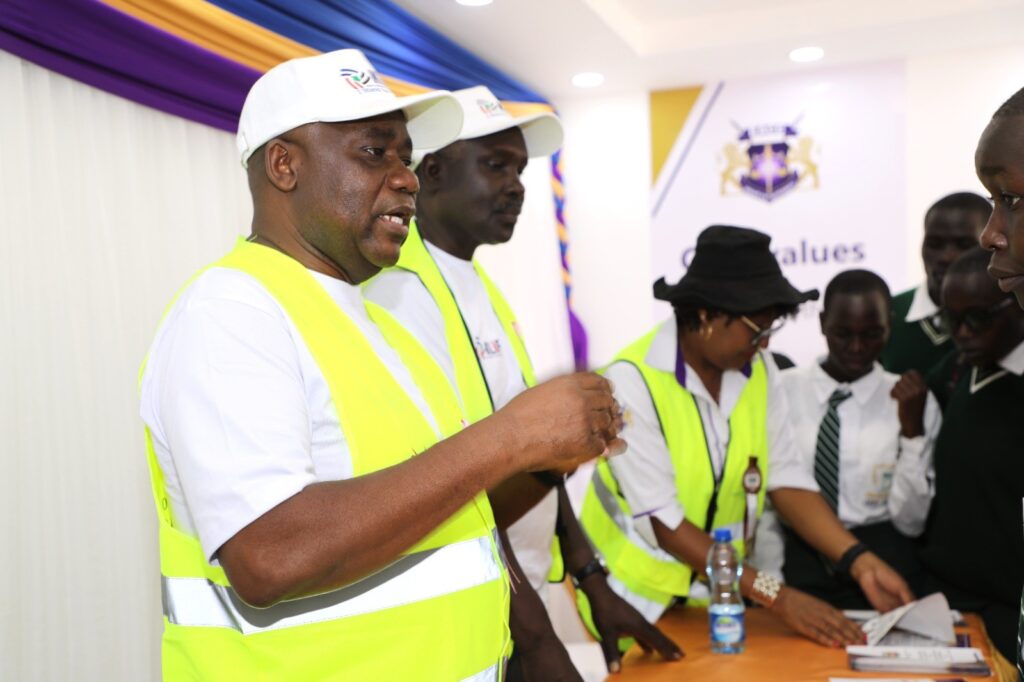
09:03:2025: The Ethics and Anti-Corruption Commission (EACC) has taken an active role in the just ended Agricultural Society of Kenya (ASK) Eldoret Show, using the platform to engage the public, particularly school-going children, in its fight against corruption. Through its preventive arm, the Education and Public Awareness (EPA) Department, the Commission spearheaded specialized programs aimed at instilling ethical values in young learners. One of the key initiatives under this effort is the Integrity Club, designed to nurture a culture of honesty and accountability from an early age. Additionally, EACC used the event as an opportunity to receive corruption reports and encourage public participation in anti-corruption initiatives. Members of the public were invited to visit the EACC booth at the Eldoret Showground to learn more about the Commission’s work and how they can contribute to the broader fight against graft. Speaking during the official opening of the show on Friday, March 7, 2025, EACC’s Director of Preventive Services, Mr. Vincent Okongo (first from left with Mr. David Too, Director Legal Services to his immediate left in the above photo), emphasized the commission’s ongoing efforts in corruption prevention, particularly within the education sector. He highlighted the agency’s work in conducting school outreach programs, launching integrity clubs, and collaborating with the Kenya Institute of Curriculum Development (KICD) to integrate ethics and integrity courses into the national curriculum. “We are engaging young children from various schools to help them understand the meaning of integrity. Many children are visiting our stand, eager to learn about EACC and the work we do,” Mr. Okongo said. Beyond the education sector, Mr. Okongo called on county governments to establish corruption prevention committees, an initiative that EACC is supporting at the county level. “We have worked with county governments to set up these structures, and we are appealing to all counties to establish corruption prevention committees, extending all the way to the sub-county level,” he added. Accompanying Mr. Okongo was EACC’s Director of Legal Services, Mr. David Too, who elaborated on the Commission’s success in asset recovery efforts across the North Rift region. He noted that EACC had successfully reclaimed public land worth Sh3.2 billion, which had been illegally acquired. The recovered parcels originally belonged to key public institutions, including the Judiciary, Uasin Gishu County Referral Hospital, the County Fire Station, the Administration Police, and Uasin Gishu County Government offices. “These properties have now been reinstated to their rightful owners, ensuring that public land is used for the benefit of the people,” Mr. Too said. He further revealed that the commission is currently pursuing the recovery of 100 more parcels of public land across the six counties. In addition to asset recovery, EACC is investigating several cases of falsified academic certificates and instances of double employment, addressing systemic integrity issues in the region.