Anti-Corruption Civil Recovery Suits need not always be conviction-based. They may be filed where there has been no prior conviction and even in lieu of criminal prosecution. The choice is at the free election of the anti-corruption body – High Court in EACC vs Mzalendo Kibunja and 2 others – Case No. E027 of 2023
High-Court-Anti-Corruption-Suit-No.-E027-of-2023-EACC-v.-Mzalendo-Kibunja-Others
EACC: We will collaborate with the youth to develop a culture of integrity, ethics, and good use of public resources
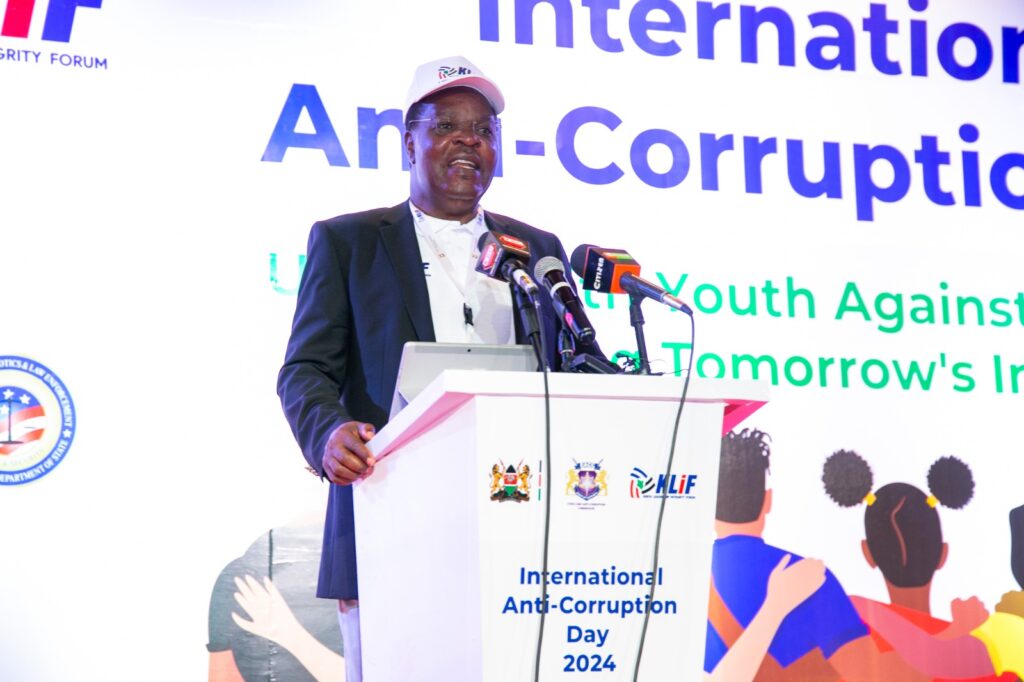
10:12:2024: The Ethics and Anti-Corruption Commission (EACC) is working on an anti-corruption legal and policy advocacy framework through which young people can champion laws, regulations, and policies in both the corporate and public space that will enhance good governance, the Commission’s Chairperson, Dr. David Oginde, has said.
Dr. Oginde (pictured above) was giving a keynote address yesterday during the commemoration of International Anti-Corruption Day (IACD) at Strathmore University. IACD has been observed annually on December 9 since the passage of the United Nations Convention Against Corruption on 31 October 2003 to raise public awareness for anti-corruption. In Kenya, it is organized by EACC in partnership with the Kenya Leadership Integrity Forum (KLIF).
Back to the drawing board for Sonko as High Court overturns his acquittal in Kes20m corruption case
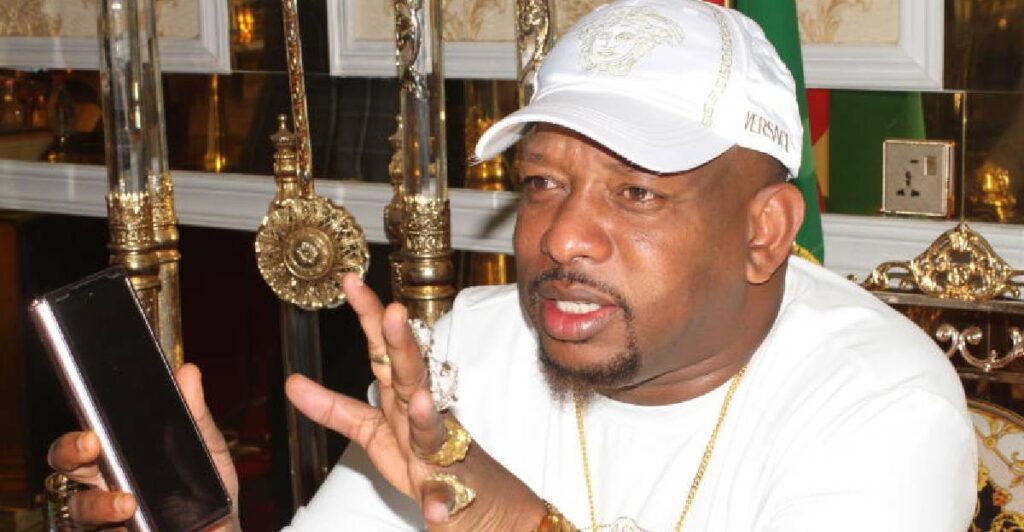
13:12:2024: It is not yet over for the former Nairobi City County Governor Mike Mbuvi Sonko and his co-accused, Antony Ombok Jamal, in a Kes20 million graft case. The two will now face a retrial after the High Court overturned their acquittal in HCACEC EO 16/2022, finding that the trial court erred in law by relying on the original charge sheet to acquit them after the same had been amended. The Director of Public Prosecutions acted on EACC’s recommendations and instituted Milimani Anti-Corruption Case No. 1 of 2020 Republic vs. Mike Mbuvi Sonko and Others on January 27th, 2020. After that, the charge sheet was amended on September 7th, 2020, and fresh charges were read against the accused on September 14th, 2022. They were charged with various offenses, including money laundering, conflict of interest, fraudulent acquisition of public property, and conspiracy to commit an offense of corruption, with the Prosecution calling 19 witnesses. However, on December 21st, 2022, the trial court, relying on the original charge sheet instead of the amended one, acquitted the accused persons for lack of compelling evidence that would warrant putting them to their defense. The ODPP, dissatisfied with the ruling, appealed the decision on December 22nd, 2022 vide the High Court Anti-Corruption Appeal No. E016 of 2022 DPP vs. Mike Mbuvi Sonko and 2 others. The DPP contended, among others, that the trial Magistrate grossly misdirected himself by relying on an old charge sheet in making a finding that the charges were defective. This Wednesday, the High Court agreed with the petition and found that the trial court erred in law by relying on the original charge sheet, which, having been amended, was deemed dead to acquit the accused. Thus, the former Governor of Nairobi City County and his co-accused will appear before the Anti-Corruption Trial Court for submissions on whether they have a case to answer based on the proper charge sheet.
Two former Isiolo County Chief Officers arraigned for procurement fraud
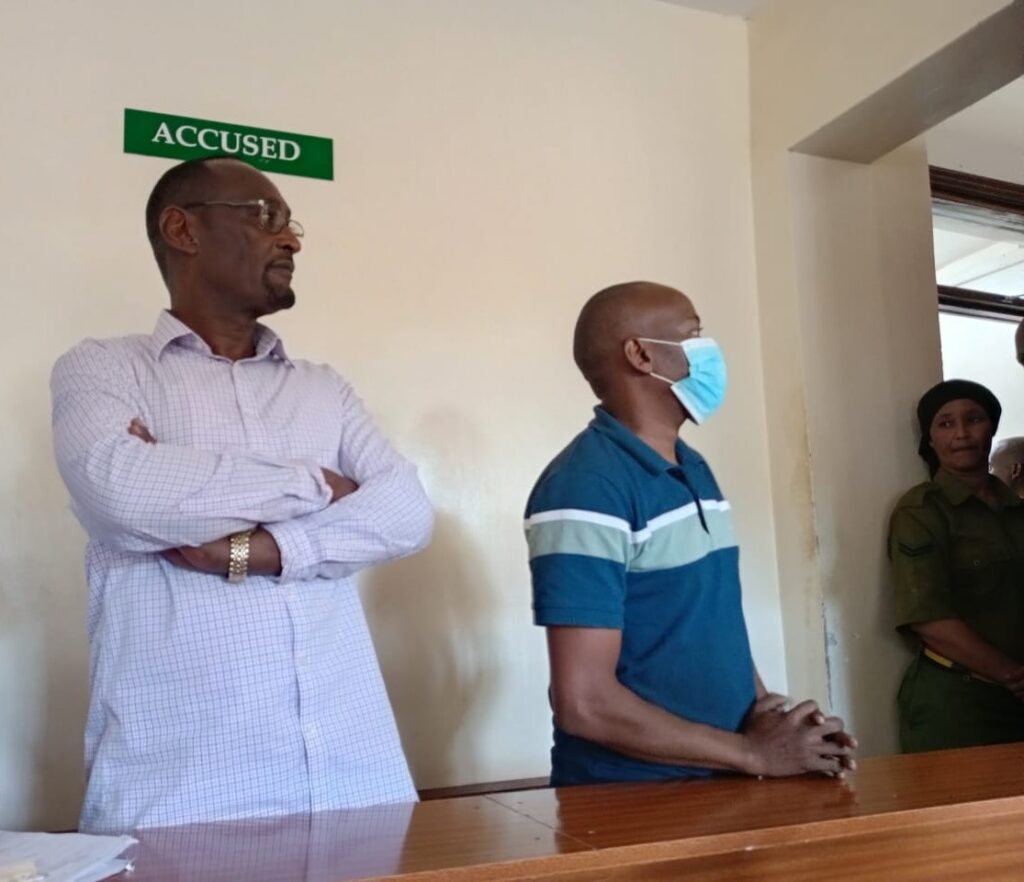
17:12:2024: The Ethics and Anti-Corruption Commission has arrested and arraigned two former Isiolo County Chief Officers for failure to comply with procurement laws and abuse of office in the irregular award of a tender worth Kes163.4 million for the supply of car hire and transport services to Debasiti Contractors and Supplies Limited. Giro Liban and Kenneth Turibu Maorwe were charged yesterday, December 16th, 2024 before Chief Magistrate Lucy Mutai. They pleaded not guilty to all the eight counts of willful failure to comply with the procurement law contrary to Section 45(2)(b) as read with Section 48 of the Anti-Corruption and Economic Crimes Act No. 3 of 2003, and four counts of abuse of office contrary to Section 46 as read with Section 48 of the Anti-Corruption and Economic Crimes Act No. 3 of 2023. EACC commenced investigations into the matter after receiving allegations that the County Government of Isiolo was in the process of making a fraudulent payment of approximately Kes163,377,754 to various suppliers for goods not delivered. Investigations established that the County Government contracted Dabasiti Contractors and Suppliers Ltd to supply food items and hire transport services. The two procurement processes with the Office of the Governor as the user department were commenced without a procurement plan and budget. Further investigations established that, despite several demands, the County failed to pay the Contractor Kes8.4 million for the transport services and Kes17 million for the relief food. The contractor sued the County for the outstanding amounts and subsequently obtained summary judgment for the amounts owed. Investigations also established that the County engaged the Office of the Auditor General (OAG) and the Pending Bills Verification Task Force Committee (PBVC) to validate the bills it owed. The OAG and PBVC, in their respective reports, classified the contractor’s debt as an eligible pending bill and recommended payment. The County and the contractor entered into a consent for payment of the outstanding sums. The County has since settled the bills. On 22nd July 2024, EACC compiled and forwarded a report to the DPP with recommendations to charge the two officials. Through a letter dated 4th November 2024, the DPP concurred. The Court released them on Kes1 million cash bail each and bonds of a similar amount. The case, whose hearing has been set for February 26 and 27, 2025, will be mentioned next week on December 23, 2024, for directions.
The learned trial magistrate made a grave error when he used a substituted charge sheet to decide whether, on the totality of the evidence adduced, a prima facie case had been established against the defendants – High Court in Anti-Corruption Criminal Appeal No. E016 of 2022
Ugandan Legislators benefit from EACC’s Integrity Governance Initiative
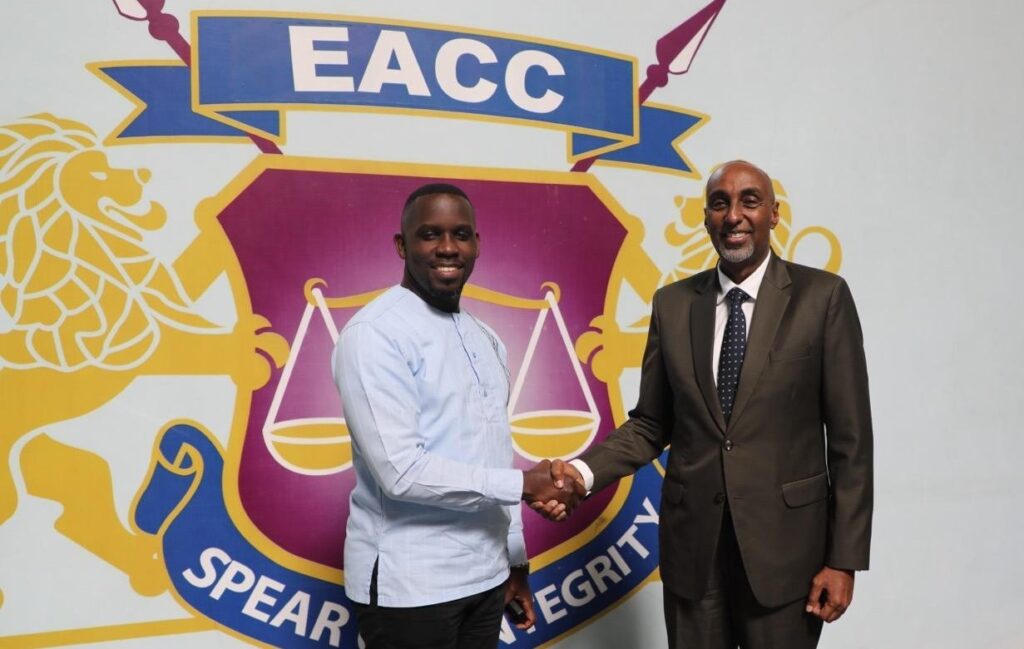
The Ethics and Anti-Corruption Commission (EACC) has, through its training wing, the National Integrity Academy (NIAca), finalized a one-week capacity-building program for a delegation of Members of Parliament (MPs) from Uganda. The Executive Leadership and Integrity Training program equipped the MPs with the skills necessary to promote ethical practices and good governance in their legislative roles. The initiative served as a platform for African leaders to address governance challenges, share practical experiences, and develop actionable strategies. Key discussions centred on ethical leadership, anti-corruption frameworks, and fostering institutional integrity. Speaking during the programme’s official opening, EACC’s Deputy Chief Executive Officer, Mr. Abdi Mohamud (pictured above with Uganda’s Leader of Opposition and head of the delegation, Hon. Joel Besekezi Ssenyonyi), underscored the critical role of ethical governance in public service. The Ugandan delegation shares a photo moment with EACC’s Deputy CEO, Mr Abdi Mohamud at Integrity Centre seated third from left. On his left is Uganda’s Leader of Opposition and head of the delegation, Hon. Joel Besekezi Ssenyonyi “Ethics is the foundation upon which we build trust, respect, and strong relationships,” he said. Highlighting Kenya’s successes in asset recovery and the use of technology to combat corruption, he reaffirmed the Commission’s commitment to advancing ethical governance. The program, held at Safaripark Hotel from December 2nd to 6th, 2024, also highlighted Kenya’s anti-corruption successes, especially EACC’s recovery of unexplained wealth, and strategies for enhancing regional cooperation towards a corruption-free East African Community. Mr. Joel Besekezi Ssenyonyi, the Leader of the Opposition in Uganda and head of the delegation, acknowledged the corruption challenges in Uganda, citing reports that nearly half of public revenue is misappropriated. He stressed the importance of regional cooperation to combat corruption and emphasized the need for leaders to prioritize service delivery. “Leadership is not about power, it is about service and leaving a legacy of integrity,” he said. EACC CEO Mr. Twalib Mbarak lauded the partnership between Kenya and Uganda and advocated for continued regional collaboration to enhance governance frameworks and build public trust. “With a renewed focus on ethics, both nations can strengthen governance and foster accountability,” he said. The training featured sessions on practical tools for embedding ethics in leadership, such as corruption risk assessments, systems reviews, and integrity testing. It also emphasized the importance of whistle-blower protection, robust anti-corruption policies, and strategies to recover unexplained wealth and enhance transparency. The delegation and a selection of some EACC leaders led by Mr. Jackson Mue, seated third from left, after the opening ceremony at Safari Park Hotel. Facilitators urged participants to “do the right thing even when no one is watching.” Personal accounts of navigating ethical dilemmas highlighted the value of collaboration, reflection, and open dialogue in leadership. The Ugandan delegation recommended integrating ethics training as a standard practice in public institutions across East Africa. They suggested clear policies, regular audits, and mentorship programs to foster transparency and accountability. At the program’s conclusion, EACC Chairperson Dr David Oginde awarded participants certificates. The initiative aligns with EACC’s mission to promote anti-corruption efforts and enhance regional ethical governance. Leaders shared personal accounts of navigating ethical dilemmas, emphasizing the value of collaboration, reflection, and open dialogue.